

Robert Forgan deep face heavy longnose scare neck putter c.1880
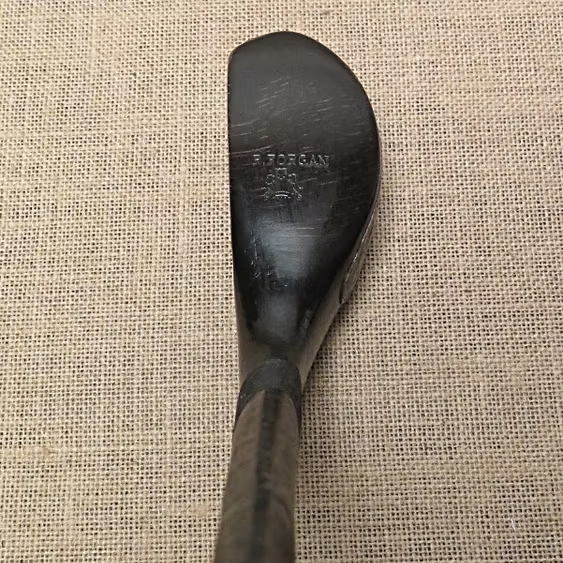
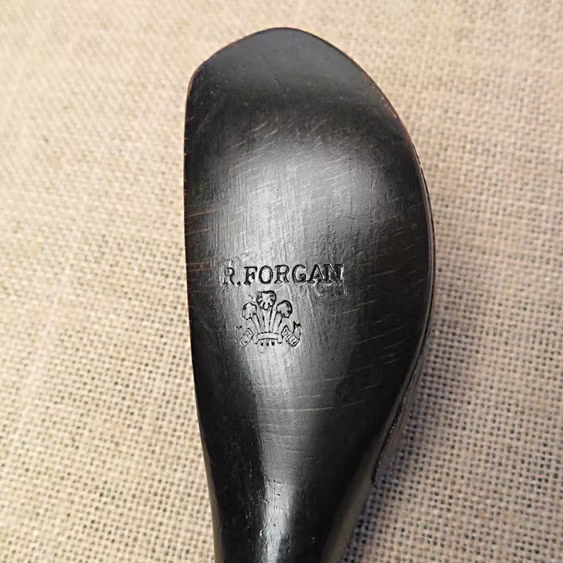
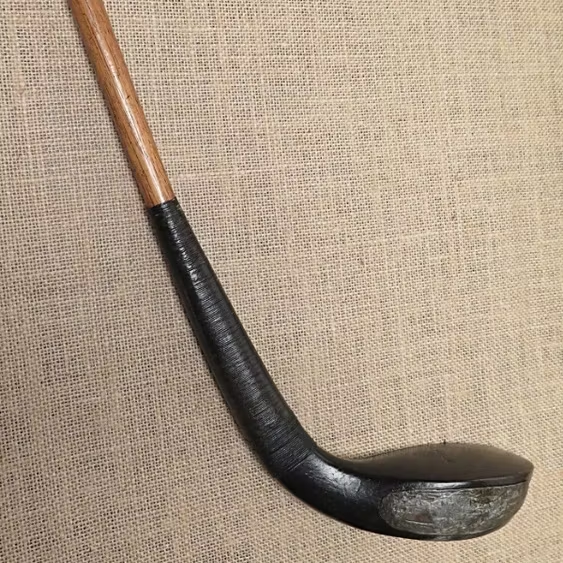
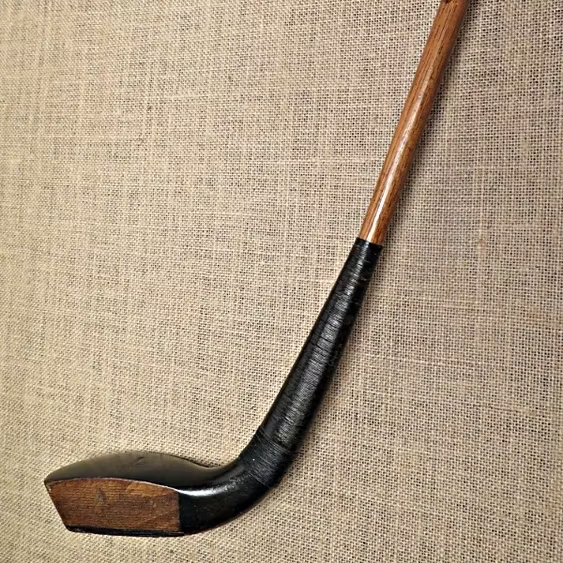
The beautifully shaped dark stained Beechwood head has a deep face that helps to form the attractive high crown that is clearly stamped Forgan with the Prince of Wales Plumes beneath. The club measures 37" (94cm).
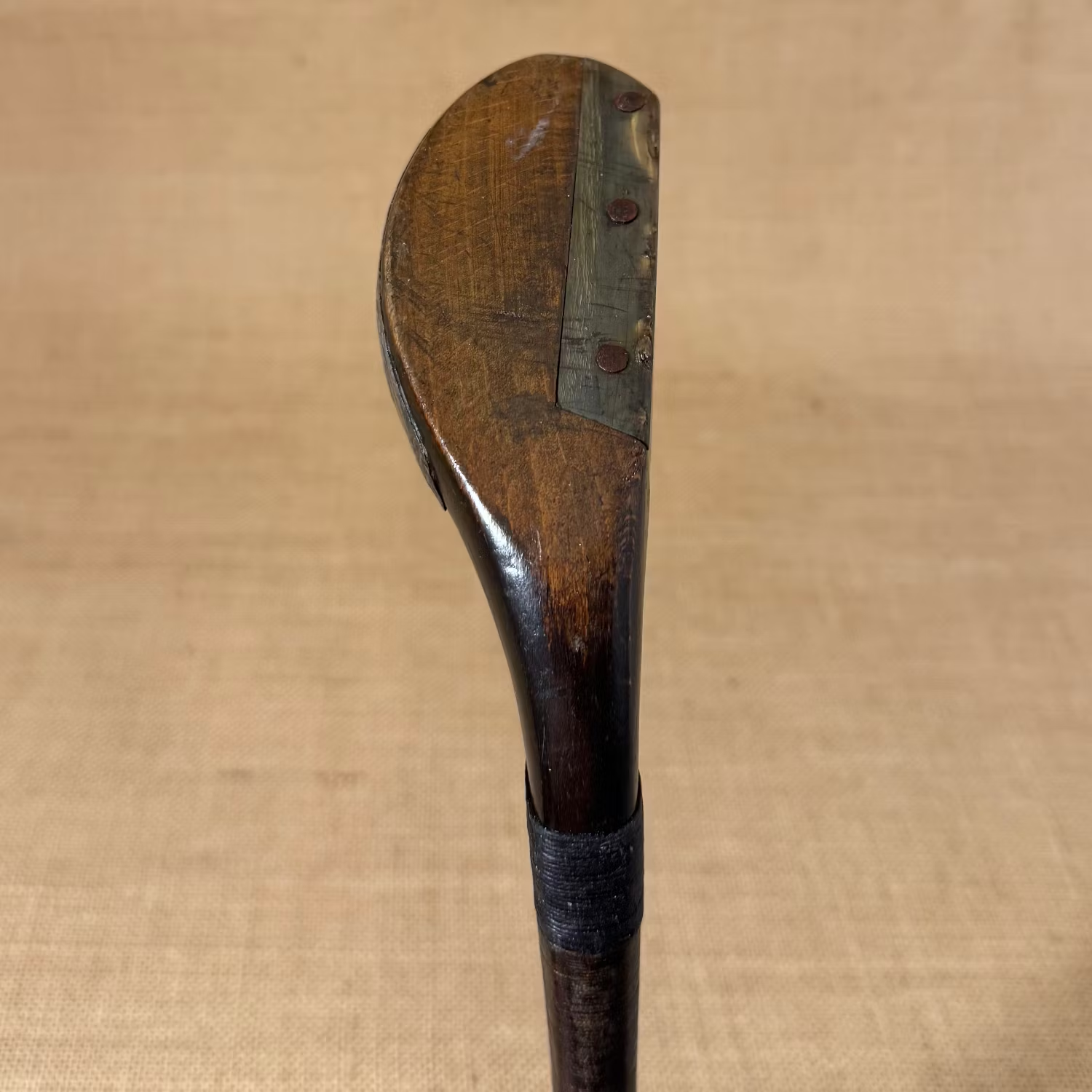
The other stunning feature is the slim neck that merges into the gradually broadening heavily weighted head to create the most exquisite looking longnose putter. The head measures 5.25” long x 1.7/8” wide with the face being 1.25” deep.
The rams horn sole insert is held firmly in place by three wooden plugs and the heavy lead back weight remains tightly fitted.
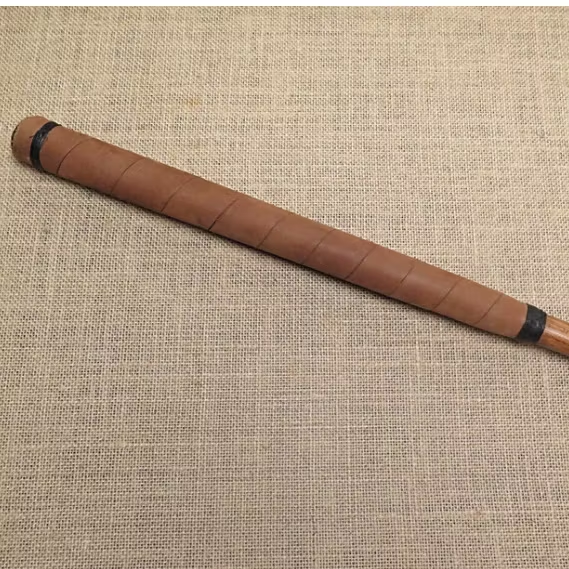
The straight shaft is simply stamped ‘R.Forgan’ below the period tan hide grip over full thick underlisting. He used this stamp before his son joined the firm in 1881. The shaft is also stamped with the original owners initials, please refer to the images.
Remaining in superb condition this putter is from the hard gutty ball era.
Robert Forgan
Robert Forgan began making clubs in 1852 whilst employed as a joiner at the Hugh Philp workshop. Forgan was the nephew of Philp who himself had gained the reputation as one of the finest club makers so the young Forgan was trained by a master craftsman.
Carrying on the Philp business after his uncle’s death, Forgan traded under his own name. His brother James joined the company after a short while and it was the beginning of a very successful business which lasted for just over a century when finally the company was sold to Spalding when they transferred the operation to
Ireland. At the peak of the Forgan era they employed 40-50 men and manufactured over 600 clubs per week exporting worldwide without compromising their very high quality standards.
Robert’s son Thomas joined the company in 1881 and soon the company name changed to ‘R.Forgan & Son’.
In 1863 Robert Forgan was commissioned to make a set of clubs for The Prince of Wales who had been elected Captain of the R & A. Soon after the company were given the Royal Warrant which allowed them to stamp the Prince’s crest (three plumed feathers) on the head of their woods below their own name stamp. In 1901 when the Prince Edward became King he appointed R.Forgan & Son as official club makers to the King which then meant the three feathers could be replaced with the symbol of a Crown. Both the three plumed feathers and crown stamps are synonymous with Forgan clubs making their very collectable.
Due to the longevity of the business old Forgan clubs are very rare and command high prices at auction sales. Robert White who was a cleek maker of high repute and renowned club maker also based in St. Andrews supplied Forgan with many heads until eventually Forgan set up his own forge in the mid 1890’s. By this time Forgan had become the largest club making business and a number of other well know club makers had served their time at Forgan’s workshop before setting up their own businesses.
Another famous cleekmaker to supply Forgan with iron heads in the early 1900’s was Tom Stewart. Ironically in late years the Forgan family purchased Tom Stewart’s Argyle Works after his death in 1931.
Forgan also bought the James Spence forge (St. Andrews) in the early 1920’s to help with the supply of heads for his ever increasing business and with the deal he was also assigned the rights to use the ’Flag Stick’ cleekmark which was then stamped on various Forgan hickory clubs and also used well into the steel
shafted era.
In 1886 he won a gold medal at the Glasgow Exhibition and in later years (1911) he produced a range of clubs called ‘Gold Medal’ which became a popular model for a number of years. Other models that brought success were the Celtic set of irons and an economy set called Scotia
Besides making clubs, Robert Forgan was himself a keen golfer playing most days until the early 1890’s. He was also a great friend of Tom Morris and had supplied him with numerous clubs over the years. Robert Forgan died in St. Andrews in 1900 aged 76 years old.